Who Are You Becoming? Navigating the Leadership Identity Gap
Jun 04, 2026
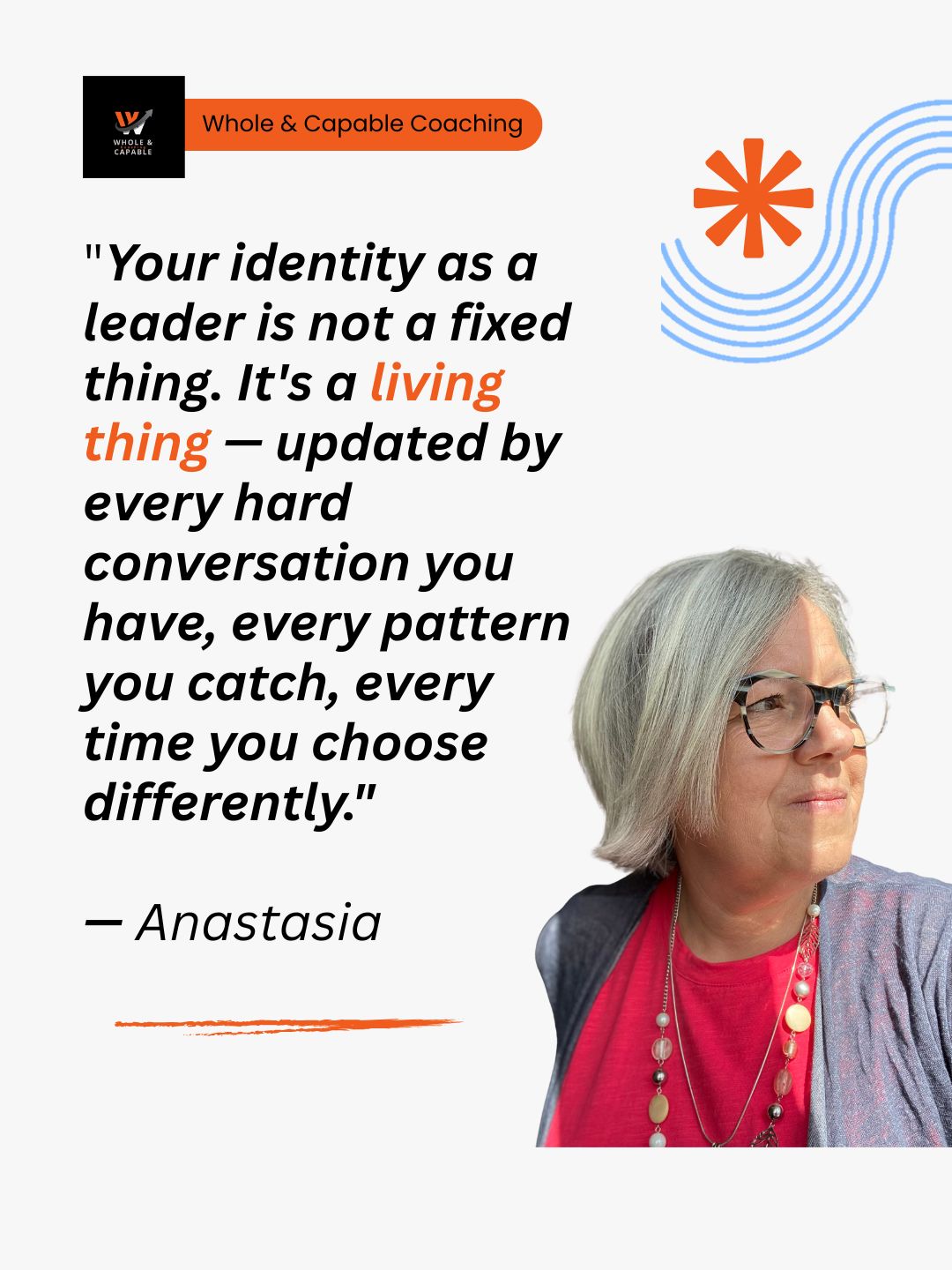
There's a chapter in every serious leader's development where something shifts beneath the surface. The skills are still there. The track record is intact. The external markers of success haven't disappeared. But something about the version of yourself you've been operating from has started to feel inadequate — not dramatically, not in a way that's easy to articulate, but persistently. Like a coat that used to fit perfectly has become slightly constraining. If you've experienced this, you're not in crisis. You're in the Leadership Identity Gap — the developmental space between who you've been and who this next chapter of your leadership is calling you to become.
Understanding this gap, and how to navigate it intentionally, is one of the most important things a leader can do. Because the gap, navigated well, is where the most significant growth happens. And the gap, navigated poorly — or avoided — is where development stalls and leadership becomes increasingly effortful and hollow.
What Creates the Gap
The Leadership Identity Gap is created by the normal and healthy progression of a leader's career. Every stage of leadership development builds on the last. The identity you constructed in your early career — the beliefs about how leadership works, the strategies you developed for success, the self-concept you've built around your professional role — was appropriate and functional for that stage. But leadership is not static. The demands evolve. The complexity increases. The skills that produced success at one level become insufficient, or even counterproductive, at the next. When this happens, there is a period — sometimes brief, sometimes extended — where the old identity is clearly inadequate but the new one hasn't yet been fully formed. This is the gap.
It's most commonly experienced at leadership transitions: moving from individual contributor to manager, from manager to senior leader, from operator to strategist. But it can also emerge more quietly, as the cumulative demands of a role shift while the identity the leader is operating from remains unchanged.
Why the Gap Is Uncomfortable
The Leadership Identity Gap produces specific forms of discomfort that leaders often misinterpret. There is *ambiguity about worth*. The old identity had clear metrics — you knew what success looked like, you could measure it, you could prove your value. The new identity often requires operating in less measurable territory: building culture, developing people, making judgment calls under uncertainty. Without the clear metrics, the question "Am I doing this well?" becomes harder to answer, and leaders who've anchored their worth to performance often feel unmoored.
There is *the sensation of being a beginner again*. Developing a new leadership identity requires genuine learning — being willing to try things you don't yet know how to do, to be uncertain in domains where you were previously expert, to receive feedback that your current approach isn't adequate. For high-achieving leaders who have built their identity around competence, this can feel like a fundamental threat.
There is *grief*. The old identity, for all its limitations, was comfortable. Known. It had narrative coherence — you knew the story you were telling about yourself as a leader. Letting it go, even in the service of something more expansive, involves a genuine loss that deserves acknowledgment.
And there is *the pressure to pretend the gap doesn't exist*. Leadership cultures often require the performance of confidence and certainty, which makes the experience of the gap difficult to acknowledge, let alone share. Leaders in the gap frequently white-knuckle through it alone, performing their way across a distance that would be significantly easier to traverse with support.
The Danger of the Gap Avoided
When leaders don't navigate the Identity Gap consciously, they typically do one of two things. Some double down on the old identity — working harder from the same patterns, trying to solve a development problem through increased effort. This produces diminishing returns, because the issue isn't effort. It's that the identity isn't adequate for the current demands, and no amount of harder work from an inadequate identity closes that gap.
Others freeze at the edge of the gap — avoiding the roles, conversations, and challenges that would require operating from the new identity. They stay safe within the territory their current identity can navigate, and their development stalls at exactly the moment it should be accelerating. Both responses are understandable. Both are costly.
Navigating the Gap Intentionally
The alternative — conscious, intentional navigation of the Leadership Identity Gap — looks like this.
*Naming it.* Simply acknowledging that you're in a developmental transition, that the old identity is no longer adequate and the new one is forming, removes enormous amounts of the shame and confusion that typically accompany the gap. It normalizes the experience and makes it possible to approach it with curiosity rather than alarm.
*Clarifying the new identity.* What does the leader this next chapter requires actually look like? Not the job description — the inner orientation. What values, what qualities, what ways of showing up? What needs to be let go of from the current identity to make room? This articulation, however tentative, gives the development work a direction.
*Seeking evidence of the new story.* Identity updates through experience. Look for moments when you operated from the new identity — when you delegated and trusted, when you tolerated ambiguity and stayed present, when you led from values rather than from performance anxiety. These moments are data. Accumulating them deliberately builds the new story.
*Building the external mirror.* The Leadership Identity Gap is genuinely difficult to navigate alone, because the patterns of the old identity are what you're looking through. External perspective — from a coach, a mentor, a trusted peer — can see the gap, name the patterns, and reflect the new identity back to you before you can reliably see it yourself. This is one of the most concrete and specific benefits of executive coaching, and it is why transitions are the highest-ROI moment for this kind of support.
*Tolerating the in-between.* There is a period in any genuine identity transition when you're no longer fully the old thing and not yet fully the new one. This is uncomfortable, ambiguous, and unavoidable. The most important skill in this period is the ability to stay in the discomfort without collapsing back into the old identity prematurely — to trust that the formation process is happening even when the new identity doesn't yet feel fully real.
What's on the Other Side
Leaders who navigate the Identity Gap consciously and fully — who do the work of letting the old story go and building the new one — describe consistent experiences on the other side. A quality of ease that wasn't there before. Not absence of challenge, but absence of the grinding effort of performing an identity that doesn't fit. Leading becomes more natural, more sustainable, more aligned with who they actually are.
A depth of impact that the old identity couldn't produce. Because they're leading from their genuine self — their actual values, their real judgment, their authentic presence — rather than from a performance, the connection with the people they lead is fundamentally different. And a relationship with their own development that is curious rather than anxious. Having navigated one identity transition consciously, they've learned something about the process. The next gap — and there will always be a next gap — is less frightening and more familiar.
The gap is not a sign that something is wrong with your leadership.
It's a sign that your leadership is growing.
And that growth is the most important work you'll do.
Anastasia Jorquera-Boschman is a Trauma-Informed Executive Coach and founder of Whole and Capable Coaching.
Ready to navigate your Leadership Identity Gap with support? Book a free consultation at wholeandcapable.com.